A worked example: where the task becomes difficult
A fictional monorepo has a dashboard package and a worker package. Running a root development command starts the wrong application for a dashboard bug. The agent also mistakes generated client files for editable source. Repository instructions should identify package-specific commands and the code-generation boundary, with a small example of how to verify a UI change. They should not promise commands that have never been run.
Decisions to make before implementation
Separate durable project conventions from one-off task constraints. Explain the precedence of root and package instructions where the tool supports it. Include commands with required environment prerequisites, but never store secret values in instruction files. Name actions requiring separate authorization, such as production migrations or external notifications. Avoid a giant rulebook whose contradictory exceptions prevent ordinary work.
A practical sequence for the work
Use the sequence below as a task boundary, not as a claim that the example has been executed. Work with approved inputs and the project’s actual architecture. If a required integration or permission is unavailable, keep that stage visibly incomplete rather than generating a plausible substitute result.
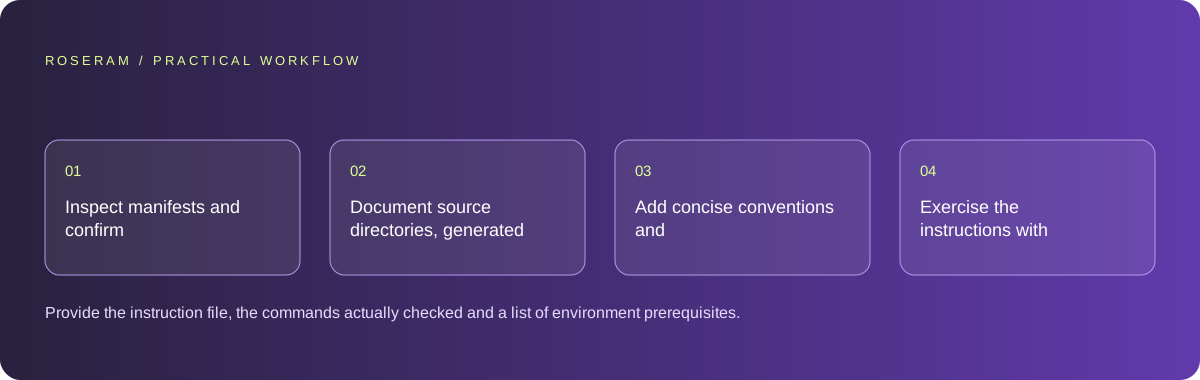
- Inspect manifests and confirm the relevant run and check commands.
- Document source directories, generated output and package ownership.
- Add concise conventions and explicit boundaries for consequential actions.
- Exercise the instructions with one controlled task and correct misleading guidance.
A detailed brief you can adapt for your agent
Replace the illustrative context with your approved facts and controlled inputs. Keep the stated boundaries when adapting the brief. The expected deliverable matters more than a particular tool name: ask for an explanation grounded in the inspected material and evidence for the requested outcome.
Draft repository instructions from the inspected package manifests and current conventions. Include dashboard and worker run commands, meaningful checks and generated-file boundaries. Mark unverified commands explicitly. Do not include secret values or grant production deployment authority. Keep task-specific requirements outside the durable project rules.Failure modes that an attractive preview can hide
Copied instruction templates can mention unavailable tools, nonexistent test suites or another team’s deployment process. That sends the agent into avoidable retries. Keep verified commands separate from proposed future commands. Instructions can also become stale after a package move; assign maintenance responsibility and review them alongside architecture changes rather than treating them as permanent facts.
Technical references: GitHub: getting useful results from coding tasks
Acceptance checks and the evidence to retain
Provide the instruction file, the commands actually checked and a list of environment prerequisites. Another contributor should be able to distinguish project conventions from assumptions.
| Controlled case | Expected evidence |
|---|---|
| Agent follows the dashboard run command | It starts the intended package and reports unmet prerequisites. |
| Task targets a generated client | The agent identifies the owning source or generator. |
| Instruction file is inspected for secrets | It contains names and setup guidance, not credential values. |
Specific answers
Common questions
Should instructions contain every project detail?
Keep durable operating guidance concise and link to deeper architecture documents where needed.
Can I copy another repository’s instructions?
Use its structure if useful, but verify every command and boundary against this project.
What is the practical completion criterion?
Provide the instruction file, the commands actually checked and a list of environment prerequisites. Another contributor should be able to distinguish project conventions from assumptions.
Sources and editorial method
These references support the indicated technical facts. Workflows, examples and decision tables are original Roseram analysis. Illustrative costs are not vendor prices. No search volume, organic difficulty, ranking result or product endorsement is implied.
- GitHub: getting useful results from coding tasks ↗
Provider-specific reference for clear task scope and repository instructions; the worked workflows here are original analysis, not claims that every agent implements GitHub features.
Roseram offers AI software and may compete with tools discussed here. Sources checked 2026-10-11. Send a sourced correction.
Your next step
Keep a practical checklist.
Mark your progress. This checklist and helpfulness choice are saved on this device only; they are not public reviews.
0 of 5 complete
Share your experience in the community or submit a sourced correction. Public experiences remain separate from editorial claims.
Bring your next idea
Keep learning. Build with context.
Get Roseram model and workspace reopening updates. The guide remains available whether or not you subscribe.
Explore the workspace guide →