A worked example: where the task becomes difficult
A fictional installation business serves three neighboring towns from one base. Each town has different appointment windows and access constraints, but the company has no separate offices. Its pages should explain actual coverage, travel rules and booking expectations rather than inventing a street address for each town. Ask the owner which differences matter to a customer deciding whether to request a visit.
Decisions to make before implementation
Separate the business location from the service area. Keep addresses, opening hours and local claims owner-approved. Decide whether a town deserves a standalone page or a section on a coverage guide. Evidence may include real local project examples with permission, not generic generated testimonials. Use structured data only for facts that correspond to the actual business and visible page.
A practical sequence for the work
Use the sequence below as a task boundary, not as a claim that the example has been executed. Work with approved inputs and the project’s actual architecture. If a required integration or permission is unavailable, keep that stage visibly incomplete rather than generating a plausible substitute result.
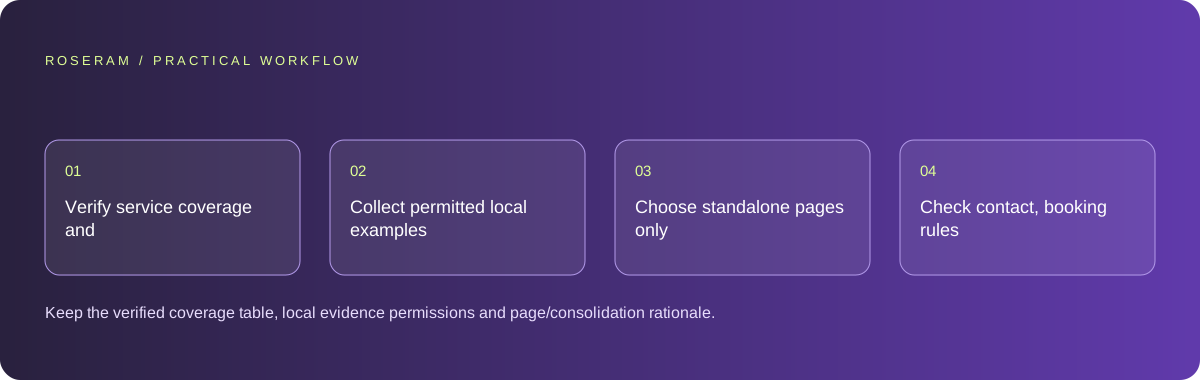
- Verify service coverage and the operational differences between locations.
- Collect permitted local examples and customer-specific questions.
- Choose standalone pages only where the answer is meaningfully distinct.
- Check contact, booking rules and factual consistency across the location set.
A detailed brief you can adapt for your agent
Replace the illustrative context with your approved facts and controlled inputs. Keep the stated boundaries when adapting the brief. The expected deliverable matters more than a particular tool name: ask for an explanation grounded in the inspected material and evidence for the requested outcome.
Draft coverage content for these three verified service areas. Use only supplied operating facts and permitted local examples. Distinguish the company base from areas served. Recommend a standalone page only where customer needs differ. Do not invent offices, testimonials or response guarantees. Match enquiry instructions to the actual booking process.Failure modes that an attractive preview can hide
Swapping city names into the same paragraph creates an appearance of coverage without additional help. Avoid fictional offices, reviews or emergency availability. A page can also promise a response time the dispatch process cannot meet. Tie local benefits to approved operational facts and provide a clear enquiry path when coverage depends on the address.
Technical references: Google: SEO starter guide
Acceptance checks and the evidence to retain
Keep the verified coverage table, local evidence permissions and page/consolidation rationale. Each public location page should add real decision value beyond the place name.
| Controlled case | Expected evidence |
|---|---|
| Visitor asks about an edge-of-area address | The page explains how coverage is confirmed. |
| Two towns have identical service details | The editor evaluates consolidation instead of forcing separate copy. |
| Page names a local office | The claimed office is a real approved business location. |
Specific answers
Common questions
Do I need a page for every nearby town?
Not necessarily. Use a coverage page when the information and customer task are substantially the same.
Can AI add an address to make the page look local?
No. Publish only actual approved business locations and accurate service coverage.
What is the practical completion criterion?
Keep the verified coverage table, local evidence permissions and page/consolidation rationale. Each public location page should add real decision value beyond the place name.
Sources and editorial method
These references support the indicated technical facts. Workflows, examples and decision tables are original Roseram analysis. Illustrative costs are not vendor prices. No search volume, organic difficulty, ranking result or product endorsement is implied.
- Google: SEO starter guide ↗
Discovery, descriptive titles, useful content and understandable links.
Roseram offers AI software and may compete with tools discussed here. Sources checked 2026-10-11. Send a sourced correction.
Your next step
Keep a practical checklist.
Mark your progress. This checklist and helpfulness choice are saved on this device only; they are not public reviews.
0 of 5 complete
Share your experience in the community or submit a sourced correction. Public experiences remain separate from editorial claims.
Bring your next idea
Keep learning. Build with context.
Get Roseram model and workspace reopening updates. The guide remains available whether or not you subscribe.
Explore the workspace guide →