A worked example: where the task becomes difficult
A fictional article page loads a code editor, animation package and analytics adapters even though the reader only needs text. Those features belong to other application routes. Trace import ownership and shared layouts before deleting packages. A server dependency listed in the manifest may not be shipped to the browser, while a shared client component can unexpectedly pull in a large runtime.
Decisions to make before implementation
Measure the actual build rather than estimating by package name. Identify route-level and shared client boundaries. Use conditional or deferred loading for features that truly are optional, with an accessible loading and failure state. Keep critical controls available. Distinguish installed packages, imported code, emitted chunks and live requests when reporting a removed integration.
A practical sequence for the work
Use the sequence below as a task boundary, not as a claim that the example has been executed. Work with approved inputs and the project’s actual architecture. If a required integration or permission is unavailable, keep that stage visibly incomplete rather than generating a plausible substitute result.
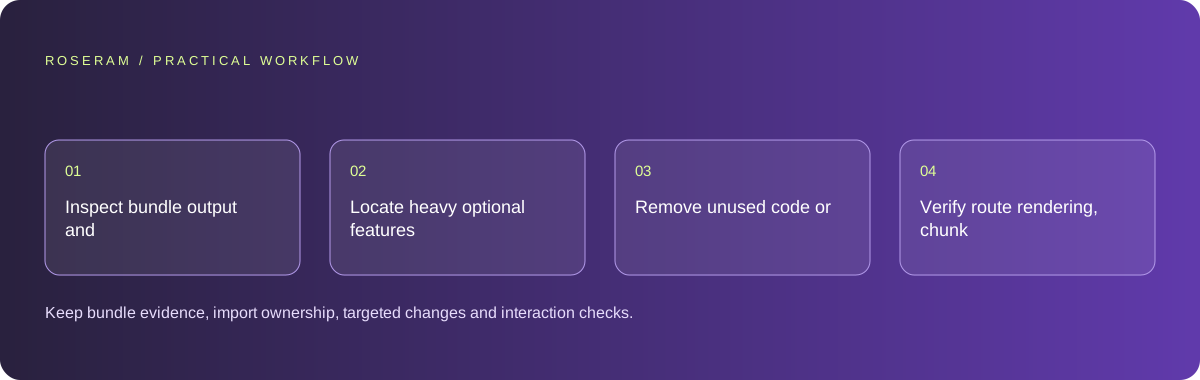
- Inspect bundle output and active import paths for the target route.
- Locate heavy optional features and server-only responsibilities.
- Remove unused code or defer supported feature boundaries.
- Verify route rendering, chunk loading and the deferred interaction.
A detailed brief you can adapt for your agent
Replace the illustrative context with your approved facts and controlled inputs. Keep the stated boundaries when adapting the brief. The expected deliverable matters more than a particular tool name: ask for an explanation grounded in the inspected material and evidence for the requested outcome.
Audit client bundle ownership for this article route. Measure build output and trace shared imports. Keep server-only work out of browser code, remove unused modules and defer the optional editor if supported. Verify the ordinary article and editor-open paths. Report installed, bundled and live integration state separately.Failure modes that an attractive preview can hide
Deleting a package because its name looks suspicious can break another route. Conversely, removing an integration card may leave the runtime active. Trace the full ownership chain. Over-splitting small modules can add complexity without meaningful transfer benefit. Avoid claiming a production reduction from a development server’s module requests.
Technical references: Google: Web Vitals
Acceptance checks and the evidence to retain
Keep bundle evidence, import ownership, targeted changes and interaction checks. Tie comparisons to comparable builds and do not call development output a production metric.
| Controlled case | Expected evidence |
|---|---|
| Article loads without opening the editor | Unneeded editor runtime is not required for the article journey. |
| Optional feature is opened | Its chunk loads and the feature still works. |
| Package is removed | Affected source imports and build output are checked for compatibility. |
Specific answers
Common questions
Does every installed package reach the browser?
No. Actual imports and build boundaries determine emitted client code.
Can I remove a provider by deleting its visible button?
Trace routes, imports and configuration too; the button is only one surface.
What is the practical completion criterion?
Keep bundle evidence, import ownership, targeted changes and interaction checks. Tie comparisons to comparable builds and do not call development output a production metric.
Sources and editorial method
These references support the indicated technical facts. Workflows, examples and decision tables are original Roseram analysis. Illustrative costs are not vendor prices. No search volume, organic difficulty, ranking result or product endorsement is implied.
- Google: Web Vitals ↗
LCP, INP and CLS measure loading, interaction and visual stability.
Roseram offers AI software and may compete with tools discussed here. Sources checked 2026-10-11. Send a sourced correction.
Your next step
Keep a practical checklist.
Mark your progress. This checklist and helpfulness choice are saved on this device only; they are not public reviews.
0 of 5 complete
Share your experience in the community or submit a sourced correction. Public experiences remain separate from editorial claims.
Bring your next idea
Keep learning. Build with context.
Get Roseram model and workspace reopening updates. The guide remains available whether or not you subscribe.
Explore the workspace guide →