A worked example: where the task becomes difficult
A fictional helpdesk wants organization accounts instead of individual-only accounts. The visible request sounds like adding a team selector, but tickets, invitations and permissions depend on the ownership model. A plan should uncover those consequences before editing the selector. Contrast that with correcting a label, where a long architecture discussion would add overhead without reducing a real risk.
Decisions to make before implementation
Describe the behavior that must remain valid for existing customers. Compare a small compatible extension with a broad rewrite, including data migration and rollback. Decide which uncertainties block implementation and which can be resolved through source inspection. Keep the plan tied to a selected approach and a bounded acceptance checklist rather than an endless catalog of possible features.
A practical sequence for the work
Use the sequence below as a task boundary, not as a claim that the example has been executed. Work with approved inputs and the project’s actual architecture. If a required integration or permission is unavailable, keep that stage visibly incomplete rather than generating a plausible substitute result.
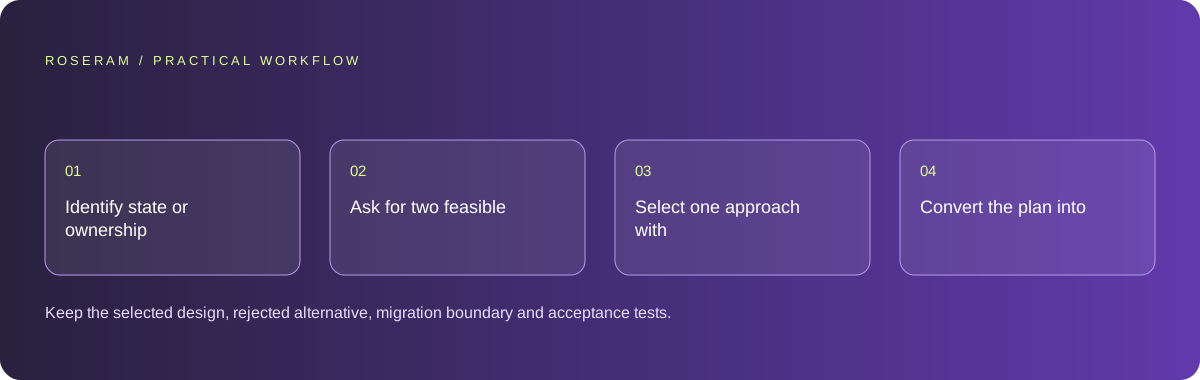
- Identify state or ownership changes implied by the request.
- Ask for two feasible approaches grounded in the existing architecture.
- Select one approach with explicit migration and rollback boundaries.
- Convert the plan into implementation steps that each produce inspectable evidence.
A detailed brief you can adapt for your agent
Replace the illustrative context with your approved facts and controlled inputs. Keep the stated boundaries when adapting the brief. The expected deliverable matters more than a particular tool name: ask for an explanation grounded in the inspected material and evidence for the requested outcome.
Plan organization accounts for the current helpdesk. Inspect existing ticket ownership first. Compare a compatible membership layer with a broader redesign, including migration, access checks and rollback. Recommend one approach and list blockers separately. Do not edit yet; return an implementation scope that preserves current personal accounts.Failure modes that an attractive preview can hide
A polished plan can conceal unsupported assumptions about database permissions or hosting. Require the agent to identify unavailable access and preserve a separate migration step when it cannot apply schema changes. Do not mark a migration complete because a SQL file exists. Also avoid approving a plan that bundles unrelated redesign work into a permission change.
Technical references: GitHub: getting useful results from coding tasks
Acceptance checks and the evidence to retain
Keep the selected design, rejected alternative, migration boundary and acceptance tests. The next implementation request should reference the plan without needing to repeat the whole discussion.
| Controlled case | Expected evidence |
|---|---|
| Existing personal account opens an old ticket | The chosen ownership migration preserves its permitted access. |
| Invitation is accepted twice | Membership remains consistent under the planned identity rules. |
| Migration fails halfway | The documented recovery path can identify and restore the last valid state. |
Specific answers
Common questions
Does every agent task need planning?
No. Use it when design uncertainty or cross-system effects justify the additional step.
Does approval of a plan mean deployment is approved?
Define that explicitly; working-copy implementation and production release are different actions.
What is the practical completion criterion?
Keep the selected design, rejected alternative, migration boundary and acceptance tests. The next implementation request should reference the plan without needing to repeat the whole discussion.
Sources and editorial method
These references support the indicated technical facts. Workflows, examples and decision tables are original Roseram analysis. Illustrative costs are not vendor prices. No search volume, organic difficulty, ranking result or product endorsement is implied.
- GitHub: getting useful results from coding tasks ↗
Provider-specific reference for clear task scope and repository instructions; the worked workflows here are original analysis, not claims that every agent implements GitHub features.
Roseram offers AI software and may compete with tools discussed here. Sources checked 2026-10-11. Send a sourced correction.
Your next step
Keep a practical checklist.
Mark your progress. This checklist and helpfulness choice are saved on this device only; they are not public reviews.
0 of 5 complete
Share your experience in the community or submit a sourced correction. Public experiences remain separate from editorial claims.
Bring your next idea
Keep learning. Build with context.
Get Roseram model and workspace reopening updates. The guide remains available whether or not you subscribe.
Explore the workspace guide →