A worked example: where the task becomes difficult
A fictional consultancy needs to summarize permitted research documents with source references. One tool produces fluent summaries but loses citations; another retains references but requires more setup. The evaluation should measure that actual task, not generic creativity. Use a small controlled corpus containing both an answerable question and a question the documents cannot support.
Decisions to make before implementation
Set criteria before running the comparison so the favorite tool does not define the scorecard afterward. Include correctness, unsupported claims, reference quality, editing time and data-handling requirements. Record account settings and dates where they affect the result. Separate list prices from observed usage and include setup or review labor in the operating comparison.
A practical sequence for the work
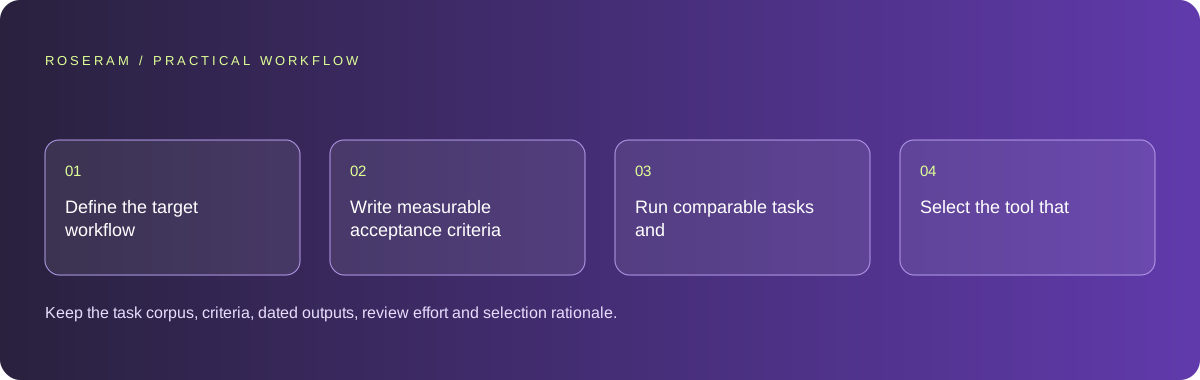
Use the sequence below as a task boundary, not as a claim that the example has been executed. Work with approved inputs and the project’s actual architecture. If a required integration or permission is unavailable, keep that stage visibly incomplete rather than generating a plausible substitute result.
- Define the target workflow and a permitted representative input set.
- Write measurable acceptance criteria and an unsupported-question case.
- Run comparable tasks and retain outputs plus human review time.
- Select the tool that meets the task requirements and document tradeoffs.
A detailed brief you can adapt for your agent
Replace the illustrative context with your approved facts and controlled inputs. Keep the stated boundaries when adapting the brief. The expected deliverable matters more than a particular tool name: ask for an explanation grounded in the inspected material and evidence for the requested outcome.
Design an evaluation for source-backed research summaries using this controlled corpus. Define criteria before scoring and include an unanswerable question. Compare retained source references, unsupported claims, review effort and operating assumptions. Do not fabricate product tests or prices. Return a scorecard whose results can be reproduced.Failure modes that an attractive preview can hide
A single impressive response can dominate a subjective ranking. Repeat representative cases and examine failure patterns. Do not invent hands-on results for tools you have only read about. A vendor’s security statement is a source to inspect, not proof that your intended configuration satisfies every data obligation. Keep sponsorship or commercial relationships visible.
Technical references: NIST: AI Risk Management Framework
Acceptance checks and the evidence to retain
Keep the task corpus, criteria, dated outputs, review effort and selection rationale. Make untested products and assumptions visibly different from observed results.
| Controlled case | Expected evidence |
|---|---|
| Tool answers a question absent from the corpus | The evaluation counts unsupported certainty as a failure. |
| Two outputs require different review effort | Human correction time appears in the comparison. |
| Vendor changes a relevant feature | The dated evaluation identifies what needs retesting. |
Specific answers
Common questions
Is there one best AI tool for every task?
No. Requirements, data constraints and failure tolerance differ by workflow.
Can vendor feature lists replace testing?
They help shortlist candidates, but do not establish how the tool performs on your actual inputs.
What is the practical completion criterion?
Keep the task corpus, criteria, dated outputs, review effort and selection rationale. Make untested products and assumptions visibly different from observed results.
Sources and editorial method
These references support the indicated technical facts. Workflows, examples and decision tables are original Roseram analysis. Illustrative costs are not vendor prices. No search volume, organic difficulty, ranking result or product endorsement is implied.
- NIST: AI Risk Management Framework ↗
A reference for managing AI risk; these task examples are original editorial workflows, not a NIST endorsement or a compliance assessment.
Roseram offers AI software and may compete with tools discussed here. Sources checked 2026-10-11. Send a sourced correction.
Your next step
Keep a practical checklist.
Mark your progress. This checklist and helpfulness choice are saved on this device only; they are not public reviews.
0 of 5 complete
Share your experience in the community or submit a sourced correction. Public experiences remain separate from editorial claims.
Bring your next idea
Keep learning. Build with context.
Get Roseram model and workspace reopening updates. The guide remains available whether or not you subscribe.
Explore the workspace guide →