A worked example: where the task becomes difficult
A fictional repair shop stocks cables in pieces and cleaning fluid in bottles across a storeroom and van. The owner wants to receive stock, transfer it and record usage. A chart showing “items available” is ambiguous when units and locations differ. Start with five fake products and a movement ledger. Ask the agent to show how each displayed quantity was derived, including any adjustment made after counting.
Decisions to make before implementation
Define whether negative stock is prohibited or merely flagged. Separate a transfer from consumption so stock leaving one location can arrive at another without changing the total. Corrections need a reason and an actor. Keep reserved stock distinct from physical stock if orders allocate inventory. Decide how concurrent movements are committed and what happens when an offline draft is submitted after another operator changes the balance.
A practical sequence for the work
Use the sequence below as a task boundary, not as a claim that the example has been executed. Work with approved inputs and the project’s actual architecture. If a required integration or permission is unavailable, keep that stage visibly incomplete rather than generating a plausible substitute result.
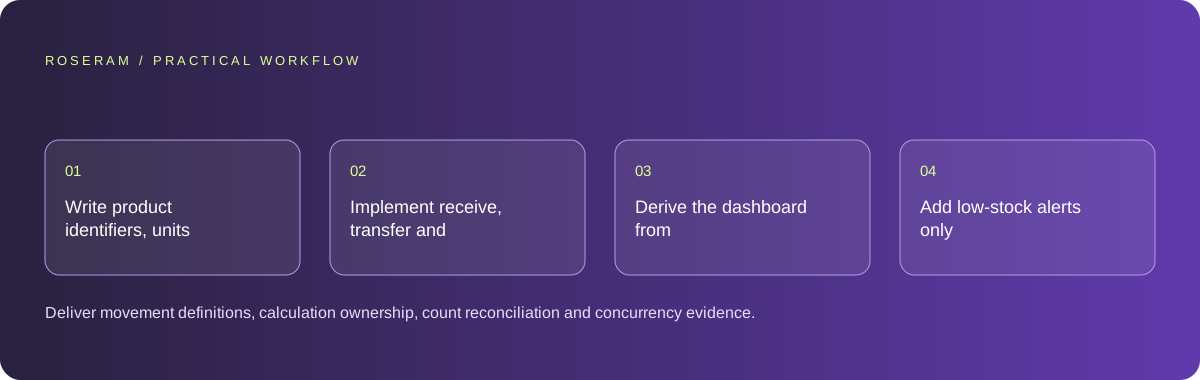
- Write product identifiers, units and locations with one movement example per operation.
- Implement receive, transfer and consume operations in the authoritative data layer.
- Derive the dashboard from movements or a reconciled balance with a traceable history.
- Add low-stock alerts only after counts and units are trustworthy.
A detailed brief you can adapt for your agent
Replace the illustrative context with your approved facts and controlled inputs. Keep the stated boundaries when adapting the brief. The expected deliverable matters more than a particular tool name: ask for an explanation grounded in the inspected material and evidence for the requested outcome.
Build a small inventory dashboard using five controlled products. Preserve product units and location identity. Implement movements with reasons and actor references; do not silently overwrite balances. Show a product history and reconcile a sample count. Keep procurement actions manual until the stock rules and permissions are approved.Failure modes that an attractive preview can hide
Directly editing a displayed total can erase the explanation for a stock change. Avoid using a spreadsheet-style cell as the only source of truth unless adjustments are logged. Test decimal quantities only for products that permit them. A low-stock warning based on a stale browser cache should not automatically create purchase orders or promise availability to customers.
Technical references: MDN: sending form data
Acceptance checks and the evidence to retain
Deliver movement definitions, calculation ownership, count reconciliation and concurrency evidence. The operator should be able to explain a displayed balance without inspecting source code.
| Controlled case | Expected evidence |
|---|---|
| Transfer three cables from store to van | Location quantities change; organization total does not. |
| Two operators consume the last unit | The configured negative-stock or rejection rule is respected. |
| Physical count differs from ledger | A reasoned correction remains visible in history. |
Specific answers
Common questions
Is a current quantity enough for inventory tracking?
It may serve a simple list, but operational stock needs an explanation for receipts, usage and corrections.
Should AI reorder stock automatically?
Only after explicit purchasing authority, reliable counts and appropriate approval controls are established.
What is the practical completion criterion?
Deliver movement definitions, calculation ownership, count reconciliation and concurrency evidence. The operator should be able to explain a displayed balance without inspecting source code.
Sources and editorial method
These references support the indicated technical facts. Workflows, examples and decision tables are original Roseram analysis. Illustrative costs are not vendor prices. No search volume, organic difficulty, ranking result or product endorsement is implied.
- MDN: sending form data ↗
Form submission transports data to a receiving endpoint; downstream delivery is a separate implementation.
Roseram offers AI software and may compete with tools discussed here. Sources checked 2026-10-11. Send a sourced correction.
Your next step
Keep a practical checklist.
Mark your progress. This checklist and helpfulness choice are saved on this device only; they are not public reviews.
0 of 5 complete
Share your experience in the community or submit a sourced correction. Public experiences remain separate from editorial claims.
Bring your next idea
Keep learning. Build with context.
Get Roseram model and workspace reopening updates. The guide remains available whether or not you subscribe.
Explore the workspace guide →