A worked example: where the task becomes difficult
A fictional design studio wants clients to read project updates and download approved deliverables. Client A must not see Client B’s brief, even if a URL or record identifier is guessed. The first version needs a project list, one project detail and an update acknowledgement. It does not need invoices, messaging and team roles simultaneously. Use two controlled accounts and fake project material while establishing the access contract.
Decisions to make before implementation
Decide whether ownership belongs to a person, an organization or an invited project team. Those models produce different access rules. Enforce ownership in the receiving service or database policy, not only by filtering interface lists. File links need the same scrutiny as structured records. Expiring download access may be appropriate for private deliverables. Explain what happens to invitations and downloads when membership is removed.
A practical sequence for the work
Use the sequence below as a task boundary, not as a claim that the example has been executed. Work with approved inputs and the project’s actual architecture. If a required integration or permission is unavailable, keep that stage visibly incomplete rather than generating a plausible substitute result.
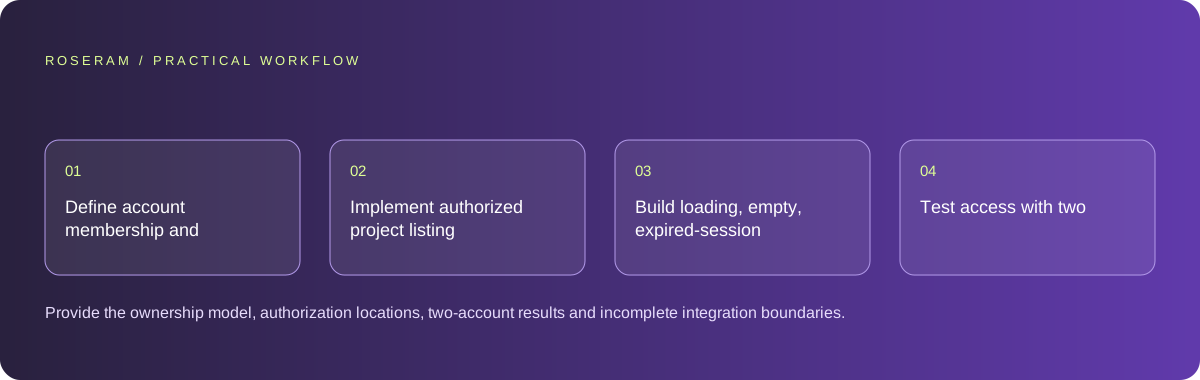
- Define account membership and the exact resource a customer can access.
- Implement authorized project listing and detail retrieval using controlled fixtures.
- Build loading, empty, expired-session and permission-denied states separately.
- Test access with two identities, then add the smallest useful customer action.
A detailed brief you can adapt for your agent
Replace the illustrative context with your approved facts and controlled inputs. Keep the stated boundaries when adapting the brief. The expected deliverable matters more than a particular tool name: ask for an explanation grounded in the inspected material and evidence for the requested outcome.
Build a client project portal using the current authentication and storage architecture. Map resource ownership first. Implement one authorized project journey and an acknowledgement action. Use fake fixtures for two accounts. Check direct record and file access, not only UI filtering. Do not add new identity providers or replace the existing authentication stack without a documented requirement.Failure modes that an attractive preview can hide
A dashboard can hide another customer’s project in navigation while exposing it through a detail endpoint. Test direct requests, changed identifiers and download URLs independently of page visibility. Avoid displaying sample balances or activity as real account data. If a backend operation is unavailable, identify that limitation rather than generating plausible placeholder records after sign-in.
Technical references: MDN: sending form data
Acceptance checks and the evidence to retain
Provide the ownership model, authorization locations, two-account results and incomplete integration boundaries. The customer view should show only confirmed records and offer useful states when none exist.
| Controlled case | Expected evidence |
|---|---|
| Account A requests Account B’s project | Receiving service denies access without leaking the private record. |
| Session expires during a draft update | Input survives and the user receives an accurate recovery path. |
| Membership is revoked | Previously available private resources become inaccessible under the access policy. |
Specific answers
Common questions
Is hiding a page enough to protect it?
No. The underlying resource requests must enforce the same access rules.
Should I generate every dashboard feature first?
Start with one complete private journey; expand after its ownership and recovery behavior are verified.
What is the practical completion criterion?
Provide the ownership model, authorization locations, two-account results and incomplete integration boundaries. The customer view should show only confirmed records and offer useful states when none exist.
Sources and editorial method
These references support the indicated technical facts. Workflows, examples and decision tables are original Roseram analysis. Illustrative costs are not vendor prices. No search volume, organic difficulty, ranking result or product endorsement is implied.
- MDN: sending form data ↗
Form submission transports data to a receiving endpoint; downstream delivery is a separate implementation.
Roseram offers AI software and may compete with tools discussed here. Sources checked 2026-10-11. Send a sourced correction.
Your next step
Keep a practical checklist.
Mark your progress. This checklist and helpfulness choice are saved on this device only; they are not public reviews.
0 of 5 complete
Share your experience in the community or submit a sourced correction. Public experiences remain separate from editorial claims.
Bring your next idea
Keep learning. Build with context.
Get Roseram model and workspace reopening updates. The guide remains available whether or not you subscribe.
Explore the workspace guide →