A worked example: where the task becomes difficult
A fictional neighborhood association wants a directory of repair businesses. Its source spreadsheet contains public names, categories, websites and opening hours collected on different dates. Some businesses have closed or changed services. The first release should make a visitor’s search useful with a small confirmed inventory, rather than imply that thousands of generated listings represent real operating companies.
Decisions to make before implementation
Store the source URL and checked date for each factual field or listing. Distinguish paid placement from editorial selection. Filters should reflect real attributes, not categories inferred confidently from a name alone. Decide how businesses request corrections and how duplicate entries are merged. Do not expose private contact data from uploaded lists simply because other listing fields are public.
A practical sequence for the work
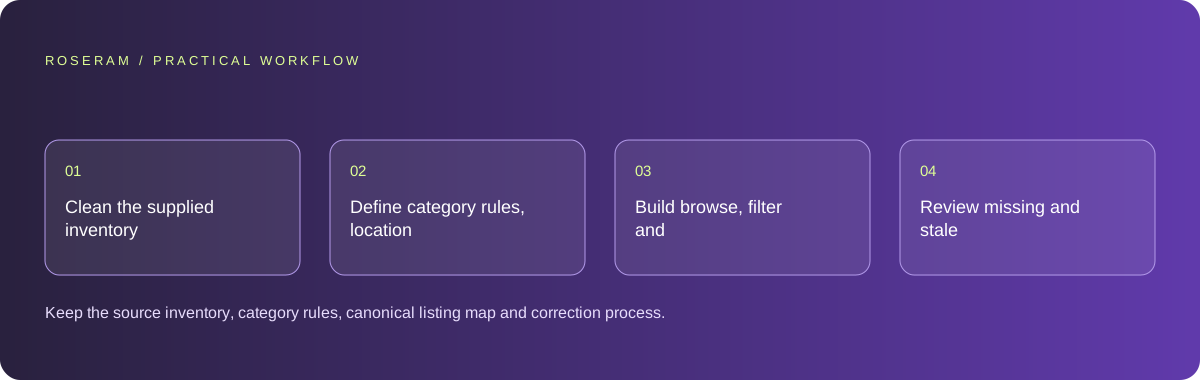
Use the sequence below as a task boundary, not as a claim that the example has been executed. Work with approved inputs and the project’s actual architecture. If a required integration or permission is unavailable, keep that stage visibly incomplete rather than generating a plausible substitute result.
- Clean the supplied inventory and verify representative entries against public sources.
- Define category rules, location format and duplicate identity keys.
- Build browse, filter and detail pages with source dates and a correction path.
- Review missing and stale listings before promoting directory completeness.
A detailed brief you can adapt for your agent
Replace the illustrative context with your approved facts and controlled inputs. Keep the stated boundaries when adapting the brief. The expected deliverable matters more than a particular tool name: ask for an explanation grounded in the inspected material and evidence for the requested outcome.
Build a repair-business directory from the supplied verified records. Preserve source dates and distinguish unknown fields. Add category and location filters, a correction request and duplicate detection. Do not fabricate inventory, reviews or affiliate relationships. Explain which pages have enough actual listings to be useful and leave unsupported location pages unpublished.Failure modes that an attractive preview can hide
Location pages can become near-identical shells when the directory has no local inventory. Keep those pages out of the public listing until they provide a real browsing answer. Avoid writing fake customer reviews to make listings look active. A link to a company is not evidence that the company endorses the directory or pays an affiliate commission.
Technical references: MDN: sending form data
Acceptance checks and the evidence to retain
Keep the source inventory, category rules, canonical listing map and correction process. Report verified coverage separately from potential future categories or locations.
| Controlled case | Expected evidence |
|---|---|
| Two spellings refer to the same business | The duplicate process preserves one attributable canonical listing. |
| Filter combination has no verified entries | The interface shows an honest empty state. |
| Business reports a changed address | The correction queue records the source and updates affected pages. |
Specific answers
Common questions
Can AI fill missing company details?
It can help research candidates, but publish factual fields only after checking an appropriate source.
Should I create every city page immediately?
Create pages when their actual inventory and local explanation satisfy a distinct browsing need.
What is the practical completion criterion?
Keep the source inventory, category rules, canonical listing map and correction process. Report verified coverage separately from potential future categories or locations.
Sources and editorial method
These references support the indicated technical facts. Workflows, examples and decision tables are original Roseram analysis. Illustrative costs are not vendor prices. No search volume, organic difficulty, ranking result or product endorsement is implied.
- MDN: sending form data ↗
Form submission transports data to a receiving endpoint; downstream delivery is a separate implementation.
Roseram offers AI software and may compete with tools discussed here. Sources checked 2026-10-11. Send a sourced correction.
Your next step
Keep a practical checklist.
Mark your progress. This checklist and helpfulness choice are saved on this device only; they are not public reviews.
0 of 5 complete
Share your experience in the community or submit a sourced correction. Public experiences remain separate from editorial claims.
Bring your next idea
Keep learning. Build with context.
Get Roseram model and workspace reopening updates. The guide remains available whether or not you subscribe.
Explore the workspace guide →