A worked example: where the task becomes difficult
A fictional release meeting discusses moving a launch date, testing a payment flow and contacting a supplier. The notes say “perhaps Jordan can check checkout,” not that Jordan accepted the task. A useful summary must keep that uncertainty visible. Work from permitted notes or recordings and identify the meeting date and scope so later readers do not confuse this draft with the final release decision.
Decisions to make before implementation
Define fields for action, owner, due date, evidence and status. Use “unassigned” and “not agreed” when facts are missing. Separate proposals, explicit decisions and background discussion. If a transcript is incomplete or speakers are uncertain, flag that limitation rather than guessing who committed. Choose a review destination that participants can correct without creating multiple contradictory action lists.
A practical sequence for the work
Use the sequence below as a task boundary, not as a claim that the example has been executed. Work with approved inputs and the project’s actual architecture. If a required integration or permission is unavailable, keep that stage visibly incomplete rather than generating a plausible substitute result.
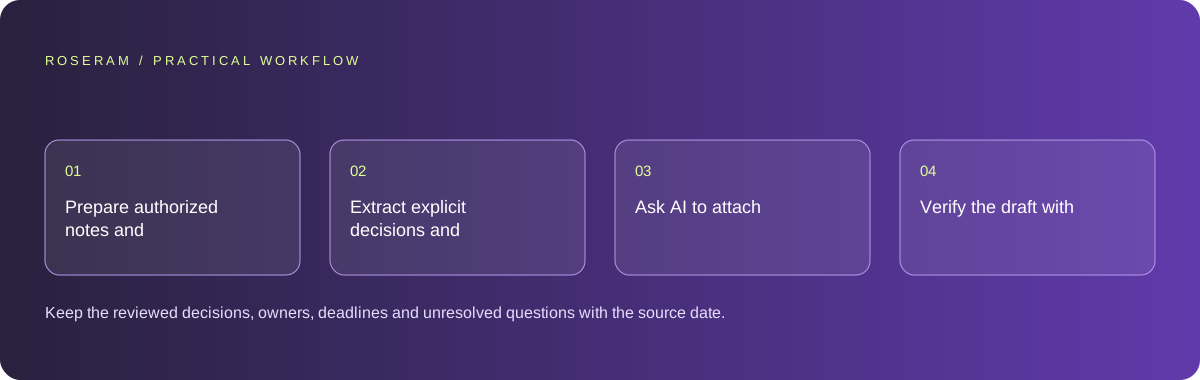
- Prepare authorized notes and identify the meeting scope and date.
- Extract explicit decisions and proposed actions into separate lists.
- Ask AI to attach source references and mark missing owners or deadlines.
- Verify the draft with participants and publish one agreed action register.
A detailed brief you can adapt for your agent
Replace the illustrative context with your approved facts and controlled inputs. Keep the stated boundaries when adapting the brief. The expected deliverable matters more than a particular tool name: ask for an explanation grounded in the inspected material and evidence for the requested outcome.
Draft an action register from these authorized release notes. Separate explicit decisions, proposals and unresolved questions. Assign owners and dates only where the notes support them. Link each action to its source passage and flag ambiguity. Do not send messages or create external tasks. Return a reviewable summary for participants to confirm.Failure modes that an attractive preview can hide
A polished summary can turn speculation into an assignment or convert a relative deadline into the wrong calendar date. Inspect statements such as “next Friday” against the meeting date. Do not automatically send messages or create tasks in external systems merely because the model drafted them. Those actions need the workflow’s actual authorization.
Technical references: NIST: AI Risk Management Framework
Acceptance checks and the evidence to retain
Keep the reviewed decisions, owners, deadlines and unresolved questions with the source date. The final register should distinguish confirmed commitments from draft extraction.
| Controlled case | Expected evidence |
|---|---|
| A task is suggested but not accepted | It remains proposed or unassigned in the draft. |
| Deadline uses a relative date | The conversion is checked against the meeting date and timezone. |
| A participant corrects the summary | The agreed register preserves the corrected commitment. |
Specific answers
Common questions
Can AI assign owners based on job titles?
It can suggest an owner, but should not present that suggestion as a commitment from the meeting.
Should a draft summary automatically create tasks?
Only when the approved workflow explicitly allows that action and its ambiguity checks are satisfied.
What is the practical completion criterion?
Keep the reviewed decisions, owners, deadlines and unresolved questions with the source date. The final register should distinguish confirmed commitments from draft extraction.
Sources and editorial method
These references support the indicated technical facts. Workflows, examples and decision tables are original Roseram analysis. Illustrative costs are not vendor prices. No search volume, organic difficulty, ranking result or product endorsement is implied.
- NIST: AI Risk Management Framework ↗
A reference for managing AI risk; these task examples are original editorial workflows, not a NIST endorsement or a compliance assessment.
Roseram offers AI software and may compete with tools discussed here. Sources checked 2026-10-11. Send a sourced correction.
Your next step
Keep a practical checklist.
Mark your progress. This checklist and helpfulness choice are saved on this device only; they are not public reviews.
0 of 5 complete
Share your experience in the community or submit a sourced correction. Public experiences remain separate from editorial claims.
Bring your next idea
Keep learning. Build with context.
Get Roseram model and workspace reopening updates. The guide remains available whether or not you subscribe.
Explore the workspace guide →