A worked example: where the task becomes difficult
A fictional workspace applies an edit and then runs two repair attempts. The interface reports only the initial model call, hiding most of the task’s work. Another task uses paid runtime minutes while waiting for a repository build. Define a task identity and record stages so the operator can understand what generated, verified and retried work contributed to usage.
Decisions to make before implementation
Choose units for model usage, runtime time, storage and external operations. Record provider-reported usage where available and clearly label estimates otherwise. Avoid double-counting a job observed through several event sources. Connect cost to the actual selected model and rate period without hardcoding an unverified current price. Keep user budgets and usage views scoped to the authorized account.
A practical sequence for the work
Use the sequence below as a task boundary, not as a claim that the example has been executed. Work with approved inputs and the project’s actual architecture. If a required integration or permission is unavailable, keep that stage visibly incomplete rather than generating a plausible substitute result.
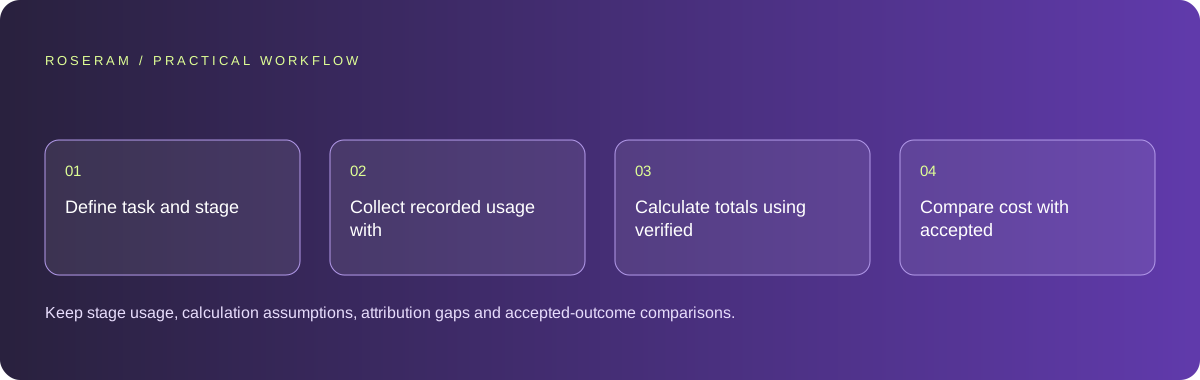
- Define task and stage identities for generation, repair and runtime work.
- Collect recorded usage with units and source references.
- Calculate totals using verified rates or clearly labeled assumptions.
- Compare cost with accepted task outcomes and identify avoidable repeated work.
A detailed brief you can adapt for your agent
Replace the illustrative context with your approved facts and controlled inputs. Keep the stated boundaries when adapting the brief. The expected deliverable matters more than a particular tool name: ask for an explanation grounded in the inspected material and evidence for the requested outcome.
Design task-level usage accounting for generation, verification, repairs and runtime stages. Preserve units and provider source, deduplicate event identity and keep estimates distinct from recorded billing. Use the selected model’s verified rate only when available. Show the cost of unsuccessful work honestly and define the approved budget stop behavior.Failure modes that an attractive preview can hide
A completed response can consume usage even when its edit is rejected or fails. Do not equate no applied changes with no cost. Conversely, a provider dashboard may aggregate unrelated tasks. Keep attribution limits visible. Budget controls should stop or confirm additional work under the approved workflow rather than silently allowing unlimited repair loops.
Technical references: Google: Web Vitals
Acceptance checks and the evidence to retain
Keep stage usage, calculation assumptions, attribution gaps and accepted-outcome comparisons. Do not claim exact billing from incomplete telemetry.
| Controlled case | Expected evidence |
|---|---|
| Task includes two repair attempts | Usage shows each stage without omitting the extra work. |
| Rate is not verified | The displayed amount is labeled an estimate with assumptions. |
| Same event is ingested twice | Accounting follows the selected deduplication rule. |
Specific answers
Common questions
Does a failed edit cost nothing?
Not necessarily. Generation and runtime work may already have consumed metered resources.
Can token counts alone describe total task cost?
They omit runtime, external services and other charged work that may matter.
What is the practical completion criterion?
Keep stage usage, calculation assumptions, attribution gaps and accepted-outcome comparisons. Do not claim exact billing from incomplete telemetry.
Sources and editorial method
These references support the indicated technical facts. Workflows, examples and decision tables are original Roseram analysis. Illustrative costs are not vendor prices. No search volume, organic difficulty, ranking result or product endorsement is implied.
- Google: Web Vitals ↗
LCP, INP and CLS measure loading, interaction and visual stability.
Roseram offers AI software and may compete with tools discussed here. Sources checked 2026-10-11. Send a sourced correction.
Your next step
Keep a practical checklist.
Mark your progress. This checklist and helpfulness choice are saved on this device only; they are not public reviews.
0 of 5 complete
Share your experience in the community or submit a sourced correction. Public experiences remain separate from editorial claims.
Bring your next idea
Keep learning. Build with context.
Get Roseram model and workspace reopening updates. The guide remains available whether or not you subscribe.
Explore the workspace guide →