A worked example: where the task becomes difficult
A fictional repair company receives enquiries, estimates jobs, schedules visits and closes invoices. Its staff describe the normal path but omit what happens when a customer changes the address or a technician cannot attend. Begin with one completed job and one failed handoff. A process map should show where information waits, who decides and what evidence indicates completion, not only draw attractive arrows.
Decisions to make before implementation
Distinguish actions, decisions, states and records. Identify which system is authoritative for each fact and which team owns an exception. Define service expectations where known, but do not invent response times. Mark manual work deliberately; it may be a necessary approval rather than inefficiency. Automation should target a verified bottleneck with a recoverable failure path.
A practical sequence for the work
Use the sequence below as a task boundary, not as a claim that the example has been executed. Work with approved inputs and the project’s actual architecture. If a required integration or permission is unavailable, keep that stage visibly incomplete rather than generating a plausible substitute result.
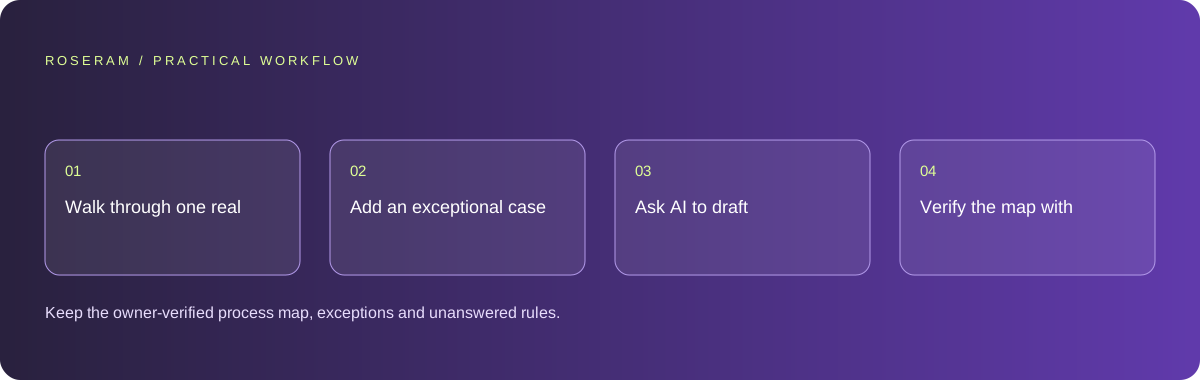
- Walk through one real permitted case and record each state transition.
- Add an exceptional case and identify the owner of every handoff.
- Ask AI to draft a map with waiting points and unresolved rules.
- Verify the map with operators before selecting one automation opportunity.
A detailed brief you can adapt for your agent
Replace the illustrative context with your approved facts and controlled inputs. Keep the stated boundaries when adapting the brief. The expected deliverable matters more than a particular tool name: ask for an explanation grounded in the inspected material and evidence for the requested outcome.
Map this repair workflow from the permitted case notes. Separate actions, decisions, waiting and record changes. Include address corrections and technician cancellation. Name owners only where supported and flag missing rules. Suggest one bounded automation opportunity, but do not send messages, place orders or modify operational systems.Failure modes that an attractive preview can hide
A model can simplify away the very exception that makes the process difficult. Keep cancellation, missing information and escalation visible. Do not grant an automated agent purchasing or customer-communication authority just because an arrow names that action. Confirm the operational authorization and integration contract before turning the map into executable work.
Technical references: NIST: AI Risk Management Framework
Acceptance checks and the evidence to retain
Keep the owner-verified process map, exceptions and unanswered rules. The selected automation brief should include trigger, permitted action, success evidence and failure owner.
| Controlled case | Expected evidence |
|---|---|
| Enquiry lacks a service address | The map shows who requests the missing information. |
| Technician becomes unavailable | The exception reaches an accountable owner and recovery decision. |
| Invoice is marked complete | The completion definition matches the authoritative operational record. |
Specific answers
Common questions
Should every manual step be automated?
No. Some steps provide necessary judgement, consent or approval.
Can AI infer missing operational rules?
It can suggest questions and alternatives, but operators should verify the rule before it becomes executable.
What is the practical completion criterion?
Keep the owner-verified process map, exceptions and unanswered rules. The selected automation brief should include trigger, permitted action, success evidence and failure owner.
Sources and editorial method
These references support the indicated technical facts. Workflows, examples and decision tables are original Roseram analysis. Illustrative costs are not vendor prices. No search volume, organic difficulty, ranking result or product endorsement is implied.
- NIST: AI Risk Management Framework ↗
A reference for managing AI risk; these task examples are original editorial workflows, not a NIST endorsement or a compliance assessment.
Roseram offers AI software and may compete with tools discussed here. Sources checked 2026-10-11. Send a sourced correction.
Your next step
Keep a practical checklist.
Mark your progress. This checklist and helpfulness choice are saved on this device only; they are not public reviews.
0 of 5 complete
Share your experience in the community or submit a sourced correction. Public experiences remain separate from editorial claims.
Bring your next idea
Keep learning. Build with context.
Get Roseram model and workspace reopening updates. The guide remains available whether or not you subscribe.
Explore the workspace guide →