A worked example: where the task becomes difficult
A fictional prototype includes a service key in a browser configuration module. The owner moves it into an environment file and assumes the problem is solved, but a previous build and repository commit still contain the value. Use a redacted finding reference and identify the credential’s authority and exposure locations. Do not paste the live key into issue descriptions or search tools to confirm it.
Decisions to make before implementation
Classify public identifiers separately from privileged credentials. Determine who could access the exposed artifact and what the key permits. Coordinate rotation with dependent services so recovery does not silently break legitimate integrations. Review provider activity where authorized. Preserve sufficient incident evidence without creating more copies of the secret, and add a prevention check at the source/build boundary.
A practical sequence for the work
Use the sequence below as a task boundary, not as a claim that the example has been executed. Work with approved inputs and the project’s actual architecture. If a required integration or permission is unavailable, keep that stage visibly incomplete rather than generating a plausible substitute result.
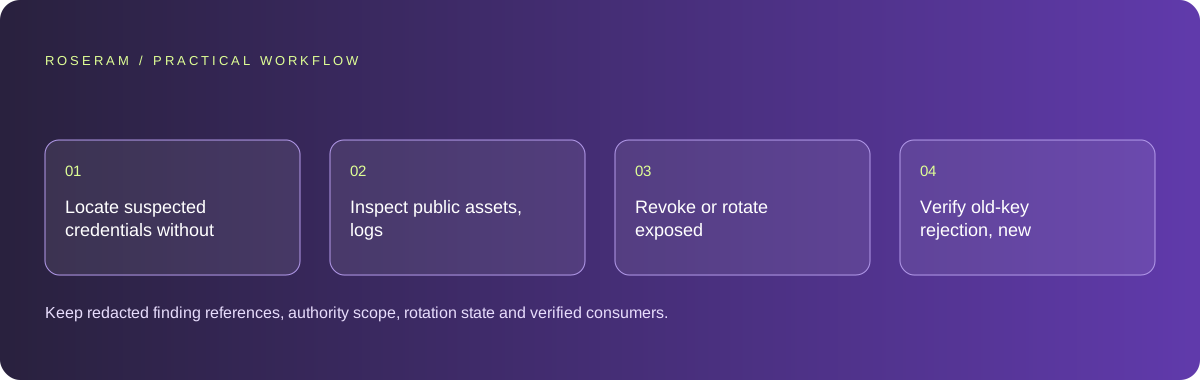
- Locate suspected credentials without printing complete values.
- Inspect public assets, logs and relevant history for exposure paths.
- Revoke or rotate exposed authority and update protected consumers.
- Verify old-key rejection, new configuration and future leak prevention.
A detailed brief you can adapt for your agent
Replace the illustrative context with your approved facts and controlled inputs. Keep the stated boundaries when adapting the brief. The expected deliverable matters more than a particular tool name: ask for an explanation grounded in the inspected material and evidence for the requested outcome.
Audit privileged credential exposure in the supplied project without printing full values. Identify source, browser-build, log and history locations. Separate public identifiers from secrets. Prepare a rotation and protected-configuration plan, then verify only with authorized provider access. Do not claim deletion alone revokes a leaked key.Failure modes that an attractive preview can hide
History rewriting can reduce discoverability but cannot guarantee retrieval of every external copy. It also affects collaborators and needs a planned process. Avoid assuming a key is harmless because no abuse is currently visible. A scan result is a lead to validate carefully; report false positives distinctly rather than ignoring all findings after one harmless identifier.
Technical references: GitHub: removing sensitive data
Acceptance checks and the evidence to retain
Keep redacted finding references, authority scope, rotation state and verified consumers. A prepared remediation plan must remain distinct from credentials actually revoked by the provider.
| Controlled case | Expected evidence |
|---|---|
| Old privileged key is used after rotation | The provider rejects its authority. |
| Fresh browser build is inspected | Private credentials are absent from public assets. |
| Protected integration uses replacement configuration | Its controlled operation succeeds without logging the new secret. |
Specific answers
Common questions
Does deleting the key from source solve exposure?
No. Revoke or rotate the exposed authority and inspect relevant copies and consumers.
Should incident notes include the full key?
No. Use restricted references and redacted evidence to avoid multiplying exposure.
What is the practical completion criterion?
Keep redacted finding references, authority scope, rotation state and verified consumers. A prepared remediation plan must remain distinct from credentials actually revoked by the provider.
Sources and editorial method
These references support the indicated technical facts. Workflows, examples and decision tables are original Roseram analysis. Illustrative costs are not vendor prices. No search volume, organic difficulty, ranking result or product endorsement is implied.
- GitHub: removing sensitive data ↗
Revoking exposed credentials and the limits of deleting them from the current file.
Roseram offers AI software and may compete with tools discussed here. Sources checked 2026-10-11. Send a sourced correction.
Your next step
Keep a practical checklist.
Mark your progress. This checklist and helpfulness choice are saved on this device only; they are not public reviews.
0 of 5 complete
Share your experience in the community or submit a sourced correction. Public experiences remain separate from editorial claims.
Bring your next idea
Keep learning. Build with context.
Get Roseram model and workspace reopening updates. The guide remains available whether or not you subscribe.
Explore the workspace guide →