A worked example: where the task becomes difficult
A fictional field-service app lets a technician draft visit notes without connectivity. The office edits the same visit while the technician is offline. On reconnect, a simple last-write-wins handler deletes the office’s correction. Start with one record type and explicit revision metadata, then choose how conflicting text is reviewed or merged under the operational policy.
Decisions to make before implementation
Define what is stored locally, how long it persists and whether the device can be shared. Local storage is not a backup guarantee. Separate queued, sending, accepted and conflicted operations. Use stable operation identity for retries and retain the last known server revision. Decide which changes can be merged automatically and which need user review.
A practical sequence for the work
Use the sequence below as a task boundary, not as a claim that the example has been executed. Work with approved inputs and the project’s actual architecture. If a required integration or permission is unavailable, keep that stage visibly incomplete rather than generating a plausible substitute result.
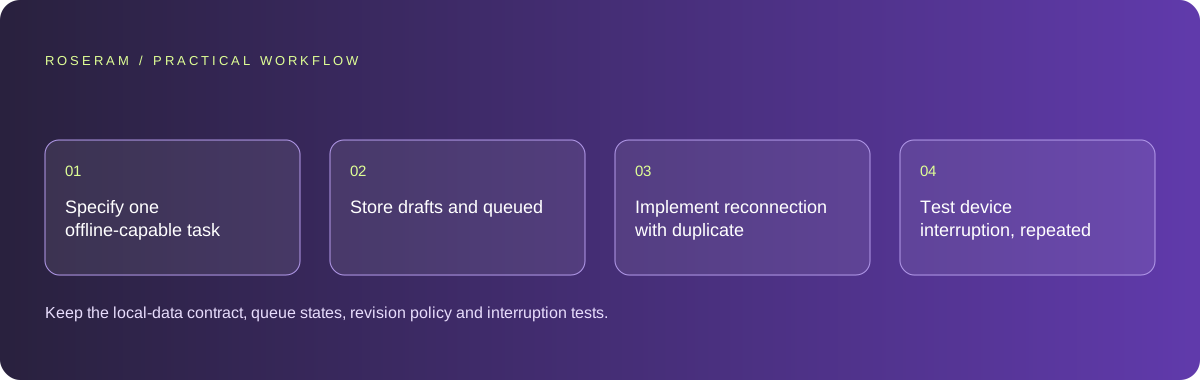
- Specify one offline-capable task and the permitted local data boundary.
- Store drafts and queued operations with identities and revision context.
- Implement reconnection with duplicate handling and a conflict policy.
- Test device interruption, repeated reconnect and newer server changes.
A detailed brief you can adapt for your agent
Replace the illustrative context with your approved facts and controlled inputs. Keep the stated boundaries when adapting the brief. The expected deliverable matters more than a particular tool name: ask for an explanation grounded in the inspected material and evidence for the requested outcome.
Implement offline visit-note drafts for one controlled record type. Distinguish local and server save status. Keep operation identity and last-known revision, then apply the approved conflict policy on reconnect. Test duplicates and a newer office edit. Do not silently overwrite conflicting content or claim local storage is a durable cross-device backup.Failure modes that an attractive preview can hide
Displaying “saved” without identifying local versus server state can mislead users into closing a device before synchronization. Browser storage may be cleared or unavailable under some conditions. Do not promise unlimited offline reliability. Keep sensitive drafts appropriately protected and provide an honest unsupported-state message if the required storage capability is missing.
Technical references: MDN: IndexedDB
Acceptance checks and the evidence to retain
Keep the local-data contract, queue states, revision policy and interruption tests. Expand offline scope only after this representative journey is understandable and recoverable.
| Controlled case | Expected evidence |
|---|---|
| Office updates a visit while technician is offline | Reconnection detects or resolves the revision conflict under policy. |
| Same queued operation retries twice | The server does not create unintended duplicate effects. |
| Local data is unavailable after interruption | The app explains recovery limits rather than inventing saved content. |
Specific answers
Common questions
Does local save mean synchronization finished?
No. Show local persistence and server acceptance as different states.
Can all conflicts be merged automatically?
Not safely for every data type; choose rules based on meaning and review ambiguous changes.
What is the practical completion criterion?
Keep the local-data contract, queue states, revision policy and interruption tests. Expand offline scope only after this representative journey is understandable and recoverable.
Sources and editorial method
These references support the indicated technical facts. Workflows, examples and decision tables are original Roseram analysis. Illustrative costs are not vendor prices. No search volume, organic difficulty, ranking result or product endorsement is implied.
- MDN: IndexedDB ↗
Browser-local structured storage reference; local persistence is not a cross-device backup guarantee.
Roseram offers AI software and may compete with tools discussed here. Sources checked 2026-10-11. Send a sourced correction.
Your next step
Keep a practical checklist.
Mark your progress. This checklist and helpfulness choice are saved on this device only; they are not public reviews.
0 of 5 complete
Share your experience in the community or submit a sourced correction. Public experiences remain separate from editorial claims.
Bring your next idea
Keep learning. Build with context.
Get Roseram model and workspace reopening updates. The guide remains available whether or not you subscribe.
Explore the workspace guide →