A worked example: where the task becomes difficult
A fictional project manager adds a task and sees a green confirmation. After refreshing, the task disappears because the handler only changed component state. Another version sends a request but ignores a denied database response. Use one fake task with a distinctive reference and identify the last stage confirmed. Do not create a new database merely because the generated interface lacks a complete save path.
Decisions to make before implementation
Choose whether data is intentionally session-local, device-local or account-synced. Those are valid but different contracts. Durable account data needs an authorized receiving operation, a storage acknowledgement and a consistent read path. Specify conflict and retry behavior for updates. An optimistic interface should distinguish pending and failed saves rather than presenting every local mutation as final.
A practical sequence for the work
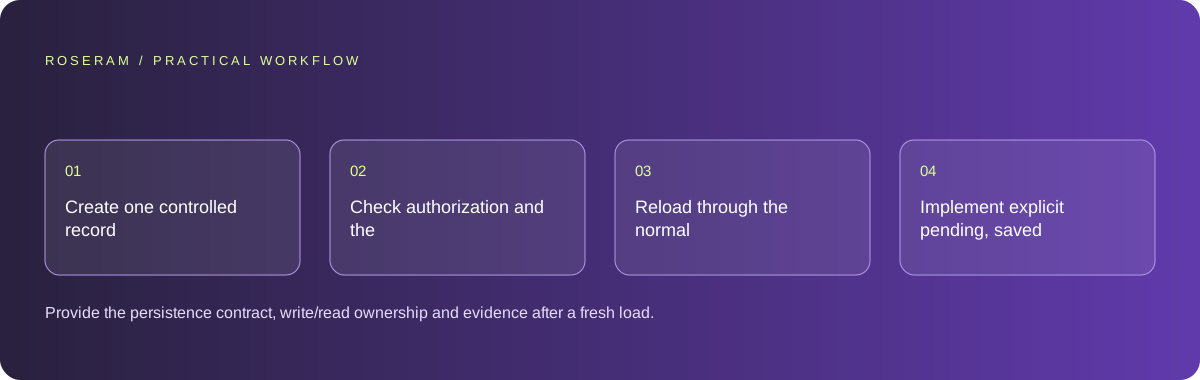
Use the sequence below as a task boundary, not as a claim that the example has been executed. Work with approved inputs and the project’s actual architecture. If a required integration or permission is unavailable, keep that stage visibly incomplete rather than generating a plausible substitute result.
- Create one controlled record and inspect the write request and response.
- Check authorization and the actual storage operation without dumping private tables.
- Reload through the normal read path and compare the saved identity and fields.
- Implement explicit pending, saved and failed states with a safe retry.
A detailed brief you can adapt for your agent
Replace the illustrative context with your approved facts and controlled inputs. Keep the stated boundaries when adapting the brief. The expected deliverable matters more than a particular tool name: ask for an explanation grounded in the inspected material and evidence for the requested outcome.
Trace task creation from handler to storage and subsequent read. Identify whether current behavior is session-local or account-durable. Use one controlled record and inspect the receiving result. Implement honest save states and duplicate-aware retry. Preserve existing data architecture and authorization; do not report success from a failed write.Failure modes that an attractive preview can hide
Using browser storage can make a demo survive reload but still fail across devices or accounts. Label that contract honestly. A second trap is a catch block that returns success after a rejected write. Preserve error evidence and input, and avoid retrying record creation without a duplicate strategy when the first response is uncertain.
Technical references: Chrome: console features reference
Acceptance checks and the evidence to retain
Provide the persistence contract, write/read ownership and evidence after a fresh load. Separate local prototype behavior from verified durable account storage.
| Controlled case | Expected evidence |
|---|---|
| Controlled record is saved and page reloads | The normal authorized read returns the accepted record. |
| Storage denies the write | The interface reports failure and preserves useful input. |
| Same uncertain create operation is retried | The selected duplicate policy prevents unintended extra records. |
Specific answers
Common questions
Does an updated list prove the save worked?
No. It may reflect only local state; verify the authoritative write and a fresh read.
Is browser storage always wrong?
No. It is appropriate for an explicitly device-local feature, not a hidden substitute for account synchronization.
What is the practical completion criterion?
Provide the persistence contract, write/read ownership and evidence after a fresh load. Separate local prototype behavior from verified durable account storage.
Sources and editorial method
These references support the indicated technical facts. Workflows, examples and decision tables are original Roseram analysis. Illustrative costs are not vendor prices. No search volume, organic difficulty, ranking result or product endorsement is implied.
- Chrome: console features reference ↗
Inspecting messages, stack traces and network errors.
Roseram offers AI software and may compete with tools discussed here. Sources checked 2026-10-11. Send a sourced correction.
Your next step
Keep a practical checklist.
Mark your progress. This checklist and helpfulness choice are saved on this device only; they are not public reviews.
0 of 5 complete
Share your experience in the community or submit a sourced correction. Public experiences remain separate from editorial claims.
Bring your next idea
Keep learning. Build with context.
Get Roseram model and workspace reopening updates. The guide remains available whether or not you subscribe.
Explore the workspace guide →