What stands out?
- Managed clusters for several database and streaming engines
- Cluster metrics, logs, VPC placement and encrypted connections
- Automated failover and optional standby or read-only nodes where supported

THE BUYER’S RESEARCH DESK
DigitalOcean Managed Databases SCAM Review. Review DigitalOcean Managed Databases pricing, engine choices, backup coverage, high availability, storage charges, migrations and current plan changes.
By Roseram Editorial. An editorial assessment of the cited sources. Roseram sells the competing workspace promoted on this page. No hands-on test, fraud verdict, or customer rating is claimed. Publisher facts checked 2026-11-17.
PRODUCT OVERVIEW
DigitalOcean Managed Databases provisions hosted database clusters for engines including PostgreSQL, MySQL, MongoDB, Kafka, Valkey and OpenSearch. DigitalOcean handles parts of cluster provisioning and maintenance, while customers still choose node size, topology, access controls, backups, application reconnection behavior and a plan that matches each engine’s feature set.
Not Provided means the review does not contain a verified value. No hands-on rating or price has been inferred.
CAPABILITIES & REQUIREMENTS
Capabilities described in the cited material, with the questions to resolve before choosing a plan.
| Described capability | What to verify |
|---|---|
| Managed clusters for several database and streaming engines | Confirm the applicable plan, limits and current availability with the publisher. |
| Cluster metrics, logs, VPC placement and encrypted connections | Confirm the applicable plan, limits and current availability with the publisher. |
| Automated failover and optional standby or read-only nodes where supported | Confirm the applicable plan, limits and current availability with the publisher. |
| Engine-specific backups, recovery and migration capabilities | Confirm the applicable plan, limits and current availability with the publisher. |
WORKFLOWS & FIT
Explore the workflows addressed in the article. These are editorial topics, not verified customer outcomes.
DigitalOcean Managed Databases provides a control panel and API for creating database clusters without manually installing and patching every node. Its catalog spans relational databases, document storage, caching, streaming, and search. The provider takes responsibility for some infrastructure tasks, but the customer remains responsible for schema design, query quality, connection management, data classification, access roles, migration planning, and deciding how much redundancy the application needs.
Read this section IN THE ANALYSISDigitalOcean describes Managed Databases as starting at about $15 per month, and its PostgreSQL pricing documentation lists Standard single-node clusters from $15 per month for a 1 GiB configuration. That is a starting point rather than the cost of a highly available production topology. The same documentation describes PostgreSQL high availability beginning with a $30 monthly primary and at least one matching $30 monthly standby.
Read this section IN THE ANALYSISDigitalOcean's documentation says clusters have automated failover, but it also distinguishes a single-node cluster from a highly available configuration. With no standby, a primary failure requires a replacement node to be provisioned, and the service is unavailable during recovery. With a standby, the standby can be promoted while a replacement is provisioned.
Read this sectionDigitalOcean Managed Databases provisions hosted database clusters for engines including PostgreSQL, MySQL, MongoDB, Kafka, Valkey and OpenSearch. DigitalOcean handles parts of cluster provisioning and maintenance, while customers still choose node size, topology, access controls, backups, application reconnection behavior and a plan that matches each engine’s feature set.
The name used here is DigitalOcean Managed Databases. The catalog points readers to www.digitalocean.com. The source links below show where this product was found. Discovery on a directory is a starting point for research. It does not show that the directory tested the product, approved the seller, or promised a result.
DigitalOcean publishes product documentation, engine-specific pricing and operational guidance. The cited evidence does not support a fraud allegation. The key buyer distinction is between automatic node replacement and high availability with a standby, plus the fact that backup, read-replica and advanced features differ by engine, edition and account eligibility.
Start with the seller and the exact offer. Check that the checkout belongs to the company you intend to pay. Read the renewal and cancellation rules. Save the plan details and your receipt. If a claim matters to your decision, ask for evidence tied to that claim instead of treating a logo, a launch badge, or a referral offer as proof.
DigitalOcean Managed Databases provides a control panel and API for creating database clusters without manually installing and patching every node. Its catalog spans relational databases, document storage, caching, streaming, and search. The provider takes responsibility for some infrastructure tasks, but the customer remains responsible for schema design, query quality, connection management, data classification, access roles, migration planning, and deciding how much redundancy the application needs.
Start with the engine and workload, not the smallest price on a comparison page. A transactional PostgreSQL service, a Kafka event stream, a Valkey cache, and an OpenSearch log index have different availability and recovery requirements. Write down the data volume, peak connections, read/write ratio, acceptable recovery point, and response-time target. Then choose an engine-specific plan and validate the feature matrix against those requirements.
A managed label reduces some operational work; it does not make every configuration equivalent.
DigitalOcean describes Managed Databases as starting at about $15 per month, and its PostgreSQL pricing documentation lists Standard single-node clusters from $15 per month for a 1 GiB configuration. That is a starting point rather than the cost of a highly available production topology. The same documentation describes PostgreSQL high availability beginning with a $30 monthly primary and at least one matching $30 monthly standby.
Additional Standard storage is listed at $0.215 per GiB per month, while node size, engine and edition change the estimate.
The pricing page exposes different engines and node shapes, and additional replicas or larger compute options can multiply the total. Model the primary, standby, read-only nodes, storage, and any monitoring or application services together. Some product pages display both hourly and monthly estimates, so note the assumed runtime and region.
DigitalOcean's PostgreSQL docs list a staged change to Standard plan availability: restrictions begin for new accounts on 15 October 2026 and apply to all accounts on 30 November 2026. A buyer planning a later deployment should verify the permitted node and standby options at setup time rather than rely on an older plan screenshot.
DigitalOcean's documentation says clusters have automated failover, but it also distinguishes a single-node cluster from a highly available configuration. With no standby, a primary failure requires a replacement node to be provisioned, and the service is unavailable during recovery. With a standby, the standby can be promoted while a replacement is provisioned.
A second standby provides more redundancy, although simultaneous failures and recovery time still belong in the application's availability plan. The important purchase question is which topology the selected plan actually allows.
Test failure behavior from the application side. Use a staging cluster to observe a connection interruption, DNS change, client retry, transaction handling, and recovery time. DigitalOcean advises clients to reconnect reasonably and respect DNS time-to-live behavior rather than cache resolved addresses indefinitely. Decide whether the application can safely retry an operation without duplicating a payment or write.
High availability at the database layer cannot correct a client that treats every brief disconnection as permanent or repeats non-idempotent work.
The feature matrix varies by database engine. PostgreSQL, MySQL, MongoDB, and OpenSearch documentation lists daily point-in-time backups, while the same matrix does not list that feature for Kafka or Valkey. Logs, metrics, VPC support, automatic updates, and failover appear across the catalog, but read-only nodes, online migration, forking, and query insights are not universal.
Check the matrix for the exact engine and edition before assuming a function shown in a general product description applies to your cluster.
A backup is useful only if it can be restored within the time and data-loss limits your business accepts. Run a restore into a separate test cluster and measure how long it takes, who can request it, and whether the application can switch over cleanly. Save migration credentials and a recovery checklist outside the database.
For engines without the backup feature you need, create and test an independent export or replication strategy. Document which data may be lost at a restore point and how a customer-facing workflow will reconcile it.
DigitalOcean documentation says new database clusters are placed in a VPC by default and lists end-to-end SSL encryption among the cluster features. Those controls reduce exposure but do not replace application-level security. Restrict trusted sources, use separate credentials for services and humans, rotate secrets, and review who can read backups or change cluster settings. Keep production and development data apart.
If production data is copied for testing, remove identifiers or apply an approved anonymization process first.
A connection string often becomes one of the most sensitive pieces of deployment configuration. Store it in a managed secret location, scope it to the application that needs it, and keep it out of logs, screenshots, support tickets, and committed files. Review how TLS verification is configured in the client library. A successful connection is not proof that only the intended hosts can connect.
Include access revocation and emergency credential rotation in the incident plan, and test that a leaked credential can be disabled without taking down unrelated services.
The provider offers an in-app migration flow and database documentation for moving existing data. The API reference describes cluster creation, deletion, scaling, replica management, and backup-based creation. PostgreSQL and MySQL documentation describe online migration capabilities, while supported migration modes differ by engine. Before a move, test schema compatibility, extensions, collation, long-running transactions, replication lag, and application connection limits.
Plan an explicit cutover and rollback window; a successful initial copy does not prove that the final switchover will be uneventful.
Managed service still leaves routine database stewardship with the customer. Monitor CPU, memory, disk, connection count, slow queries, growth and replication health. Set alerts before disk fills or connection pools saturate. Establish who approves scaling and who pays for it, and rehearse the path from a usage alert to a safe plan change.
Save infrastructure configuration in version control so the cluster can be recreated consistently. For a business-critical system, keep a documented exit path to another region or provider and periodically test that data can be exported in a usable format.
Compare the service with Amazon RDS or Aurora, Google Cloud SQL, Azure Database services, Neon, Supabase, and self-managed database hosting where each option matches the engine. Use the same memory, storage, availability target, backup policy, region, network transfer assumption, and support coverage. Include staff time for maintenance and incident handling, not only the monthly node cost.
A simpler managed service may suit a small team, while a large organization may require specific compliance, extensions, global replication, or administrative controls that change the comparison.
DigitalOcean's official documentation and pricing pages establish a published database offering and explain many technical and billing details. They do not prove that DigitalOcean is a scam or certify an individual cluster's reliability. This is a desk review; Roseram did not provision a database or measure its performance.
Confirm engine, plan eligibility, standby topology, region, storage price, backup coverage, access rules, restore behavior, migration fit, and the November 2026 plan change dates before relying on a configuration for production data.
The useful question is whether DigitalOcean Managed Databases helps you build, connect, or run a useful piece of software. Turn the product description into a short list of tasks you can check. For each task, define the input, the finished result, and the person who accepts it. Keep a note of the steps that still need manual work.
A feature can be available yet fail to fit the way your team works.
Look closely at source access, integration limits, runtime costs, and recovery after an error. Ask which plan includes the feature, what limit applies, and whether another paid service is required. Separate a current feature from a roadmap item. If you only have a directory description, confirm the detail on the publisher's own site before choosing a plan.
Use the pricing evidence shown below as a starting point. Match the amount to its currency, billing period, and unit. A per-user price, a usage charge, an annual commitment, and a one-time payment describe different bills. Check the number of people or tasks you expect, then include any required add-ons. Do not treat an affiliate commission as the price a customer pays.
Estimate the full cost of using DigitalOcean Managed Databases for a month of real work. Include setup, time spent learning the tool, fixing mistakes, moving data, and paying connected services. Compare that total with the value of the finished work.
A low starting price can still be expensive for your workload, while a higher plan may be useful only if you actually need its added capacity.
| Plan | Price | Billing context |
|---|---|---|
| Standard single-node PostgreSQL | Starts at $15/month in the current documentation | A development-oriented starting point; not highly available |
| PostgreSQL high availability | From $30/month for primary plus a matching $30/month standby in documented configuration | At least two nodes; confirm node and edition eligibility |
| Additional Standard storage | $0.215 per GiB per month | Storage, node size, engine and topology change the total |
| Other engines and editions | Configured cluster price varies | Kafka uses brokers; MongoDB, Valkey and OpenSearch have their own node options |
DigitalOcean pricing pages may show estimated monthly values for example configurations; the invoice depends on engine, node plan, storage, region, standby/read-only nodes and applicable taxes. The PostgreSQL documentation also describes plan restrictions rolling out to new accounts from 15 October 2026 and to all accounts from 30 November 2026; check eligibility before designing a Standard cluster.
Check official pricingA useful first test is to build one small feature, test an invalid input, inspect the result, and save an export you can reopen. Write the expected result before opening the product. Use information you are allowed to share. Save the original input and the output so someone else can repeat the check.
This is a proposed test for buyers; it is not a claim that Roseram ran it or measured a success rate.
Count completed tasks and corrections, rather than clicks or attractive screenshots. Try a normal case, a missing-information case, and a request to change the result. Note the time, the cost, and the help you needed. If you cannot obtain a trial, ask for a demonstration using an example you provide. Decide which unanswered questions would stop a purchase before discussing a longer contract.
One risk to test is a working demo that becomes hard to maintain or move. Look for a clear explanation of what happens when a limit is reached or an action fails. Ask whether you can stop work safely, recover a previous version, and get a useful answer from support. Marketing can describe the intended outcome while leaving the recovery steps unclear.
Those steps matter when real people depend on the result.
Check who owns the account, the domain, the saved data, and any work you create. Find out which exports are available on your plan and what access remains after cancellation. Keep a copy of the terms that apply when you buy. A useful exit plan reduces disruption if your needs change or the product stops fitting the job.
None of these checks by itself establishes fraud; together they help you make a better purchase.
Consider DigitalOcean Managed Databases when the sourced features match a job you already need to finish and you can check the outcome. Start with a small scope. Expand only after you understand the result, the cost, and the effort needed to keep it working. If your main requirements are still unclear, write them down before comparing subscription tiers.
Compare services that solve the same job. Use the same example, the same acceptance checks, and the same cost period for each one. A specialist product may fit one part of your work while a broader workspace helps with another. Choose based on the job you can demonstrate, rather than a promise that one tool will do everything for everyone.
Compare the job first: can each candidate help you build, connect, or run a useful piece of software? Use one written brief, the same expected outcome and the same billing period. Include required integrations, the cost of revisions and the work needed to move your data. The linked reviews below are further research, not a claim that every product is an equivalent replacement.
Keep DigitalOcean Managed Databases's purchase decision separate from Roseram's promotion on this page. Roseram may be relevant when your task is to create and revise a software project, but it is not a substitute for every specialist service. Ask each provider to demonstrate the requirement that matters to you before committing.
The listing has not been rechecked for this article. A directory listing is a discovery source, not a product test or endorsement.
The linked sources establish the available description and provenance. A fresh readable publisher-page capture has not been attached to this research trail. This is desk research. No hands-on evaluation, independent peer review, or customer interview is claimed.
No attributable customer testimonial has been verified for this page. Ask for a customer reference with a similar use case and read the original feedback in context before deciding.
Start with comparable workflows. These source-led reviews explain their own pricing and limitations.
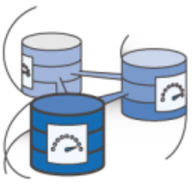
Managed relational database infrastructure
Amazon Aurora is presented by AWS as a managed relational database service. A useful purchase evaluation should connect the proposed engine and configuration with the application’s actual workload and operating requirements. Managed infrastructure changes responsibilities; it does not remove the need to design access, test behavior and understand how recovery fits the application.

Managed PostgreSQL database and developer platform
Prisma Postgres is a managed PostgreSQL 17 service with connection pooling, usage-based operation and storage pricing, regional selection, and daily backups on paid plans. Prisma’s current pricing page also bundles Prisma Compute allowances, so the monthly plan is a combined platform offer rather than a database-only charge. This review examines the difference between database operations and compute requests, current plan limits, backups, connection modes, region choices, availability claims, cost controls, and migration responsibilities before a buyer moves production data.

Prepaid virtual numbers, SMS verification, eSIMs and developer API
1001SMS sells access to temporary SMS numbers, longer-rental virtual numbers, travel eSIMs and API-accessible services through a prepaid balance. Its published terms restrict use to legitimate verification, prohibit financial-service verification and require compliance with the target service’s terms. The product is not a private, permanent phone line: the terms say numbers are temporary and remain with underlying providers, while the service’s marketing acknowledges third-party blocks and failed verifications. The API uses scoped bearer keys and documents a 120-request-per-minute limit. Pricing varies by country and service and is displayed before purchase. Its current payment policy says unused card or bank top-ups may be refunded within 48 hours if no purchase has been made, but crypto deposits are final and some service purchases, renewals and delivered eSIMs are nonrefundable. The evidence reviewed supports a real operating service with material privacy, compliance and refund limitations; it does not substantiate calling 1001SMS a scam.
Open a question for the answer and its research limitations.
This review does not establish that DigitalOcean Managed Databases is fraudulent. The SCAM Review title introduces a buyer due-diligence question, not a fraud finding. Follow the cited sources, check the exact publisher identity and evaluate the specific offer before paying.
The dated USD, monthly and hourly estimates vary by engine and configuration plan comparison in this review was observed on 2026-11-17. Prices, billing periods, usage limits and eligibility can change. Confirm the complete offer on the linked official pricing page before checkout.
No hands-on test is claimed. This is an editorial desk review of the cited material. The buyer checklist describes a test you can run, rather than a result Roseram has measured.
Yes. Roseram publishes this page and promotes its own paid AI workspace. Compare each product against your requirements; a Roseram promotion is not evidence that another product is unsuitable.
FOLLOW THE SOURCE
Publisher pages explain the offer. Directory records explain where it was found. Neither is a performance test or an official endorsement of this review.
READER SIGNAL
The most useful review describes a real job, the conditions of the test, and what another reader should verify.